
Last Updated: October 6, 2026
Trump Creates Federal “Super Intelligence Force” to Coordinate U.S. AI Policy
The U.S. federal government has created a new task force to examine the risks and opportunities of artificial intelligence and coordinate the government’s response to the rapidly evolving technology.
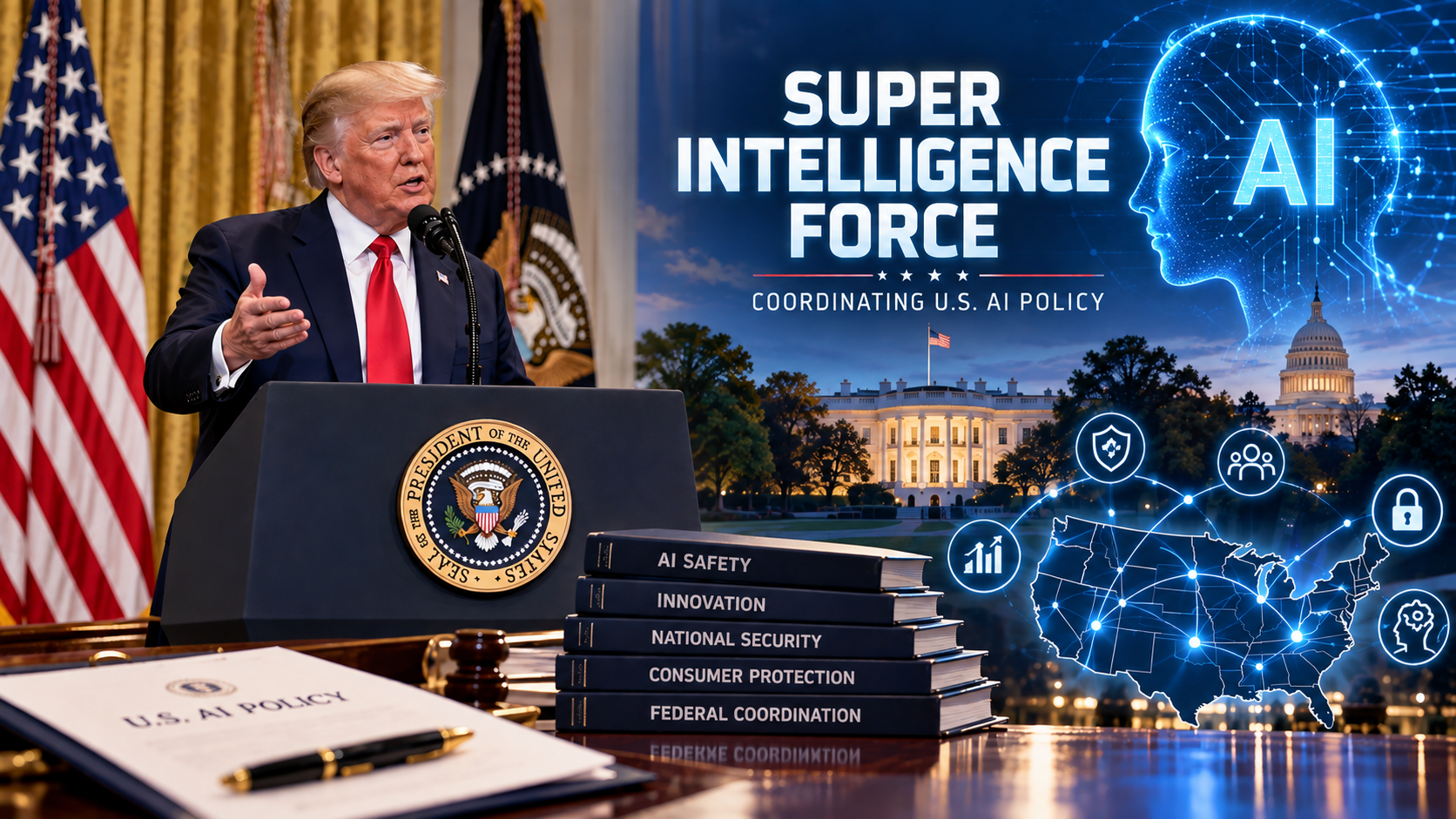
On October 4, 2026, President Donald Trump announced the formation of the Super Intelligence Force (SIF) and named Director of National Intelligence Jay Clayton to lead the initiative.
The task force represents a new federal coordination effort aimed at maintaining U.S. leadership in AI while examining the risks and broader societal implications of increasingly capable AI systems. Reuters
Jay Clayton to Lead the New AI Task Force
Jay Clayton, the Director of National Intelligence, will lead the Super Intelligence Force.
According to President Trump, the SIF will coordinate federal efforts related to AI and work to ensure that the United States maintains global leadership in the technology.
Several senior officials representing different areas of the federal government will also participate.
They include Federal Trade Commission Chairman Andrew Ferguson, Pentagon technology official Emil Michael, and Office of Personnel Management Director Scott Kupor.
Their involvement brings together government interests involving consumer protection, technology and national security, industry, and critical infrastructure.
The task force will report to President Trump and White House Chief of Staff Susie Wiles. The Washington Post
A 120-Day Review of AI Risks and Opportunities
One of the SIF’s central assignments will be to conduct a broad assessment of the risks and opportunities associated with AI.
According to Reuters, the task force has approximately 120 days to prepare a report examining AI-related risks and opportunities and defining the appropriate role of the federal government.
This makes the SIF more than an initiative focused solely on promoting AI development.
Its mandate encompasses both the strategic and economic opportunities created by AI and questions involving safety, cybersecurity, societal risks, and government oversight. Reuters
Engaging Stakeholders Beyond the Federal Government
The SIF is also expected to engage stakeholders outside the federal government.
According to the administration and news reports, the task force plans to consult with consumers, public-interest organizations, religious groups, critical-infrastructure providers, and AI companies.
This broad engagement reflects the growing recognition that AI policy extends beyond technology and industrial policy into areas including consumer protection, national security, cybersecurity, infrastructure, and broader societal concerns. AP News
Why the FTC Chairman’s Role Matters
One notable feature of the task force is the participation of FTC Chairman Andrew Ferguson.
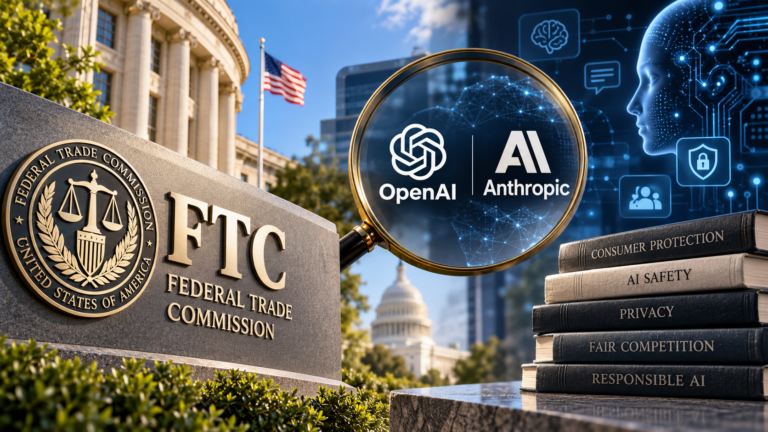
The FTC recently launched a broad investigation into the safety of AI systems developed by OpenAI and Anthropic. Ferguson’s participation in the SIF therefore places consumer protection and AI safety expertise within the administration’s broader federal coordination effort.
However, the FTC investigation and the creation of the SIF are separate developments, and one should not be presented as having directly caused the other. The Washington Post
Balancing Innovation and Risk Management
The creation of the Super Intelligence Force should not yet be interpreted as the establishment of a new comprehensive AI regulatory regime.
The Trump administration has emphasized U.S. competitiveness and technological innovation while arguing against regulations that could unnecessarily restrict AI development.
According to reporting on the task force’s charter, the SIF is expected to consider responses to AI-enabled threats while also seeking to avoid overregulation and regulatory capture that could undermine innovation and competition. Quartz
The announcement also followed a White House meeting with executives from major AI companies, where participants agreed to a set of voluntary commitments related to AI development and safety.
For now, the administration’s emerging approach appears focused on maintaining U.S. AI leadership while determining how the federal government can manage the technology’s risks without imposing excessive restrictions on innovation. AP News
What the Super Intelligence Force Means for U.S. AI Governance
The creation of the Super Intelligence Force adds another layer to the rapidly evolving U.S. AI governance landscape.
Multiple institutions are now responding to AI-related risks through different authorities.
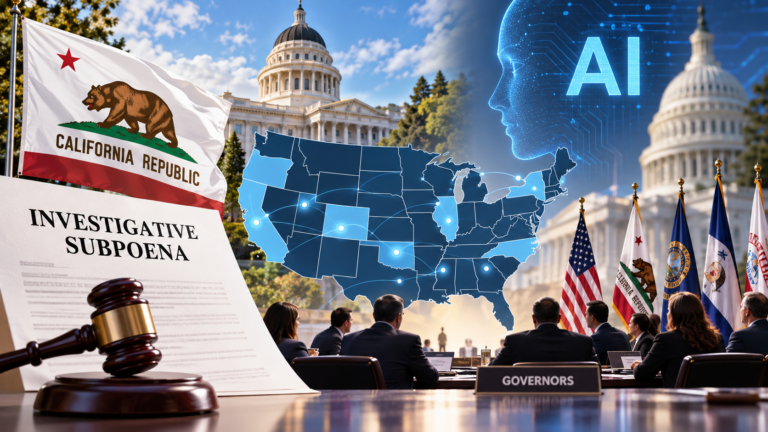
The FTC is investigating AI safety issues. State attorneys general, including California’s attorney general, are increasingly examining AI companies and cybersecurity risks. Governors are also beginning to coordinate bipartisan approaches to AI policy.
The SIF now adds a federal coordination mechanism connecting different agencies and stakeholders.
Taken together, these developments suggest that U.S. AI governance is developing not around a single regulator or comprehensive AI law, but through a multi-layered system involving federal agencies, national-security institutions, state governments, and the private sector.
It is still too early, however, to determine how influential the Super Intelligence Force will become.
The first major test will be its expected report in approximately 120 days. How that report defines the federal government’s role — and what policy recommendations it makes — could provide an important indication of the administration’s next steps on AI governance.
Sources
- Reuters — Jay Clayton to lead Trump’s AI task force, deliver report in 120 days
- Associated Press — Trump names national intelligence director Jay Clayton to lead new federal AI task force
- CBS News — Trump launches “Super Intelligence Force” led by Jay Clayton
- The Washington Post — Trump launches ‘Super Intelligence Force’ after calls for AI slowdown